Websites no longer have to be built in exactly the same way as a few years ago. Artificial intelligence can speed up information architecture, copywriting, visual concepts and parts of development. In practice, one rule keeps proving itself: AI works best as a collaborator, not as a replacement for thinking about the customer.
Start with the goal, not with AI
Before creating the first section, I need to know what the website is supposed to achieve. A company presentation focused on enquiries needs a different structure from a web application that should save its users time every day.
For Vinelan and Kolotoče Vocásek, the goal is to explain the offer quickly and make it easy to send an enquiry. Shift Planner has a different focus: it is a practical application for shift-based workplaces, where usability and functionality matter most.
Where AI helps me
Vinelan: from catalogue to an enquiry-generating website
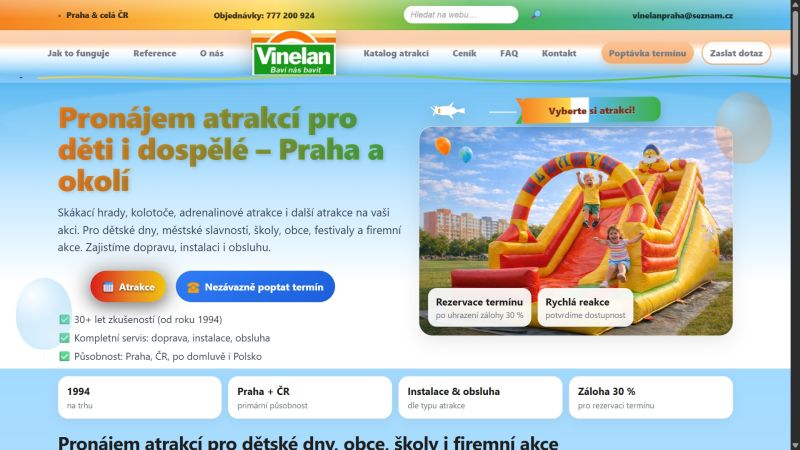
Vinelan is a good example of a presentation website becoming a business tool. Visitors can explore the offer, find the information they need and move directly towards an enquiry. The project also includes a content management system (CMS) and an AI enquiry chatbot that guides customers through a few questions and helps them create a more useful enquiry.
Kolotoče Vocásek: simple for visitors and useful for SEO
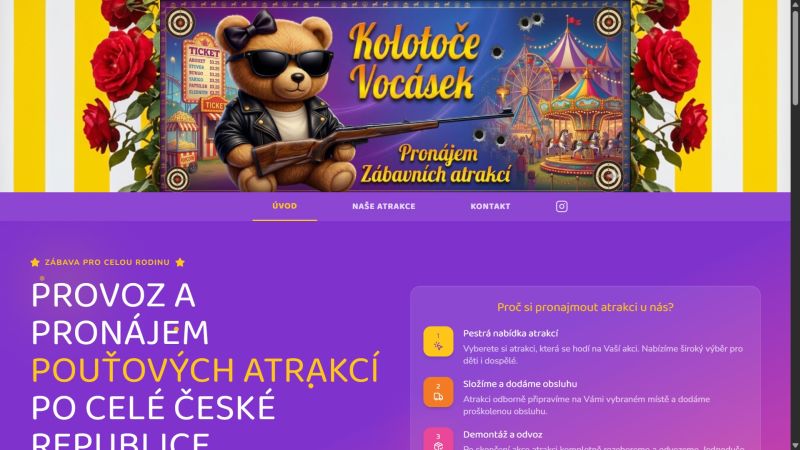
This project focuses on a clear service presentation and quick orientation. AI helps me draft and standardise copy, explore content structure and create variants. The final copy still has to reflect the company’s real offer.
Shift Planner: AI is not only for marketing websites
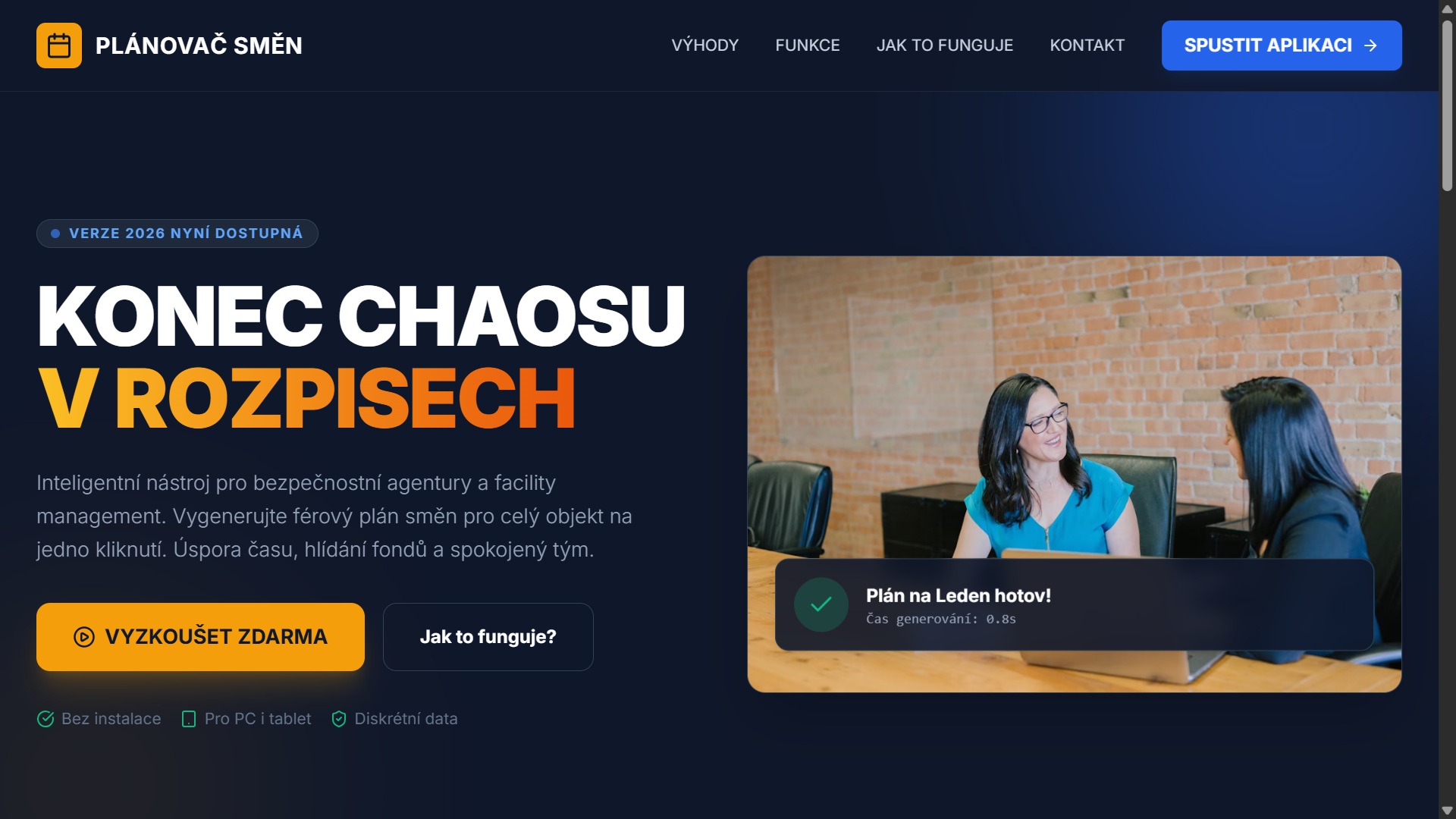
Shift Planner represents a different type of work. It is primarily an application designed to solve an operational problem. AI can speed up interface concepts, development and debugging, but an application must also handle login flows, permissions, validation, error states and real usage scenarios.
What AI cannot decide for the client
AI can generate ten headline variants in seconds, but it does not automatically know which one best fits a specific business. It can draft a form, but it does not inherently know the company’s sales process. It can generate code, but it will not always recognise when a feature is confusing for an ordinary visitor.
The biggest value is not that AI creates something instead of a person. The value is that it lets us test more alternatives quickly and spend more time improving the outcome.
My current workflow
- Define the goal. What should the visitor do and who is the website for?
- Design the structure. Which pages, sections, CTAs and forms make sense?
- Use AI for a fast first version. Copy, layouts, code and visual directions.
- Adapt it to the real project. Remove generic language and add actual business information.
- Test it. Mobile, tablet, links, forms, SEO and common user scenarios.
- Keep improving. Add CMS, landing pages, automations or AI features where they create value.
An AI website should not feel like a cheap copy
For me, AI is not about producing as many pages as possible. Its value is that I can move from an idea to a working prototype faster, iterate more often and reach a stronger result with less unnecessary manual work.
AI can speed up production, but the website still has to work for your customers.
If you need a new website, redesign, CMS or an AI enquiry chatbot, we can first discuss what the solution actually needs to do.